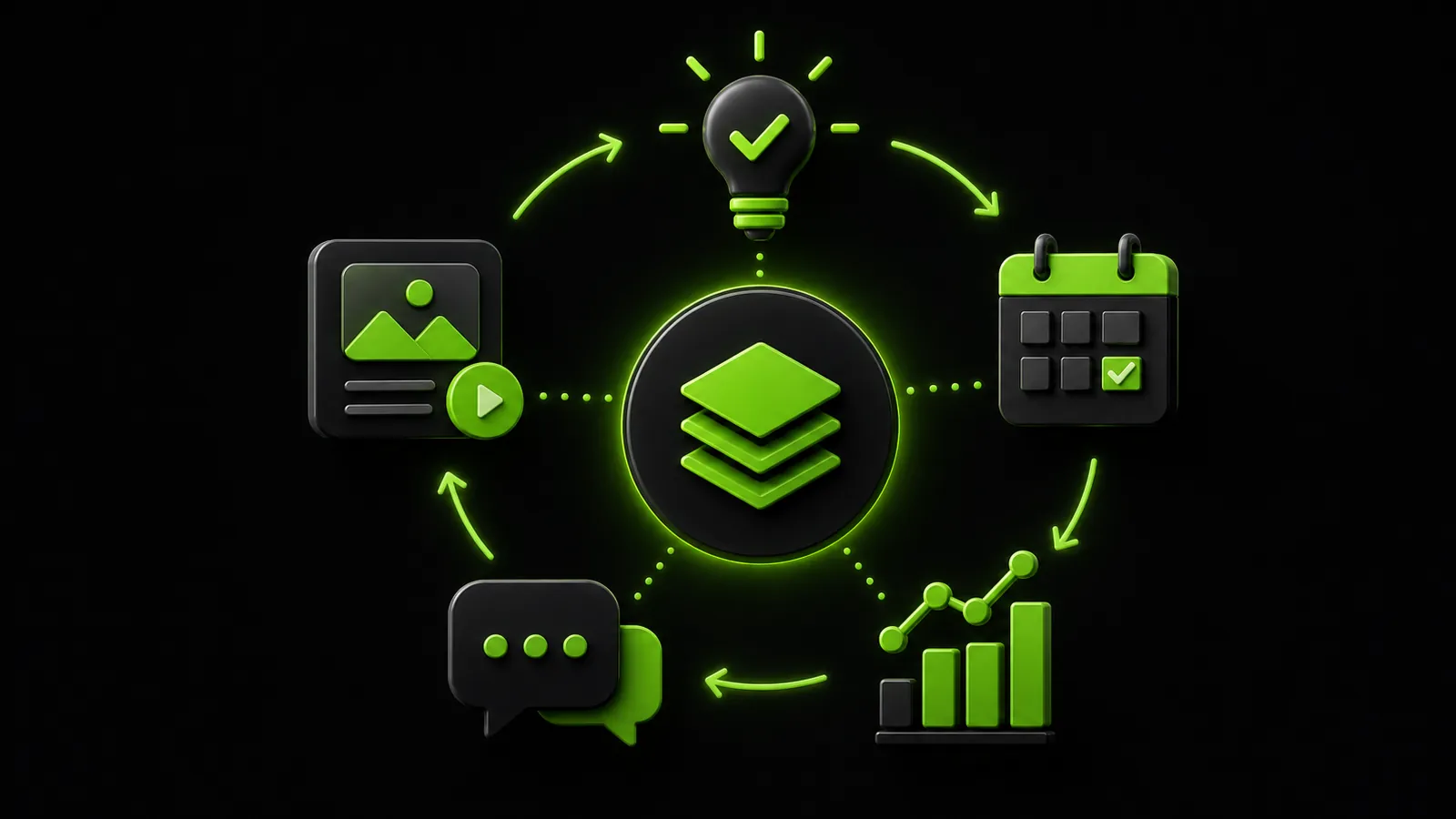
Social media graphic design breaks the moment you scale past two or three posts per week. The instinct to design each post as its own creative job is the exact thing that makes social feel unsustainable. The fix isn't more designers — it's a system.
What a Social Media Graphic System Actually Is
A system replaces one-off creative decisions with pre-solved templates. Every post type you publish regularly gets a reusable layout. The designer's job shifts from "design this post" to "plug content into the right template, tweak where needed."
Done right, this makes the difference between 15 minutes and 2 hours per post — with no visible drop in quality.
The Core Templates Every Brand Needs
Based on what gets posted weekly across most B2B and creator accounts, the minimum viable social graphic system includes:
- Quote card (bold typography, brand color background)
- Stat/data card (one big number + context)
- Listicle carousel (5–10 slides, consistent layout)
- Announcement / launch (product or feature reveal)
- Testimonial / social proof
- Blog repurpose (teaser graphic + link)
- Event / webinar promotion
That's seven templates. Most businesses never need more than ten.
How to Design Templates That Don't Look Templated
The trick is building variability into the system — structured variation that still feels fresh:
- 3 background treatments per template (solid, gradient, image-based)
- 2 typography pairings that can swap in
- A library of accent elements (shapes, textures, icons) the designer can sprinkle in
Now the same "quote card" can render in six visually distinct ways without anyone designing from zero.
Format Considerations Per Platform
- Instagram / LinkedIn: 1080×1350 portrait is the new default — it takes more screen real estate than square.
- Carousels: 10-slide max, but 5–7 performs best.
- Twitter/X: 1600×900 for native embed clarity.
- TikTok / Reels thumbnails: 1080×1920, safe zones critical — avoid placing type in the bottom 300px where UI overlaps.
Need a social media graphic system built?
PixiFlow builds and maintains social systems as part of your design subscription — 48-hour delivery.
See PlansWorkflow: How 50 Posts/Month Actually Ships
- Content team drafts copy in a shared doc, tagged by template type
- Designer (or subscription team) batches 10 posts per working session
- Review happens in one pass — not per-post Slack threads
- Scheduling tool pulls approved files
Batched production is 3–4× faster than serial production. The bottleneck is almost always review, not design. Systematize review too.
The Takeaway
High-volume social media graphic design doesn't need more output — it needs less bespoke work. Build the system once, enforce it, iterate on it quarterly. Your feed will look more consistent, your designer will be saner, and your content calendar will stop being the limiting factor.